
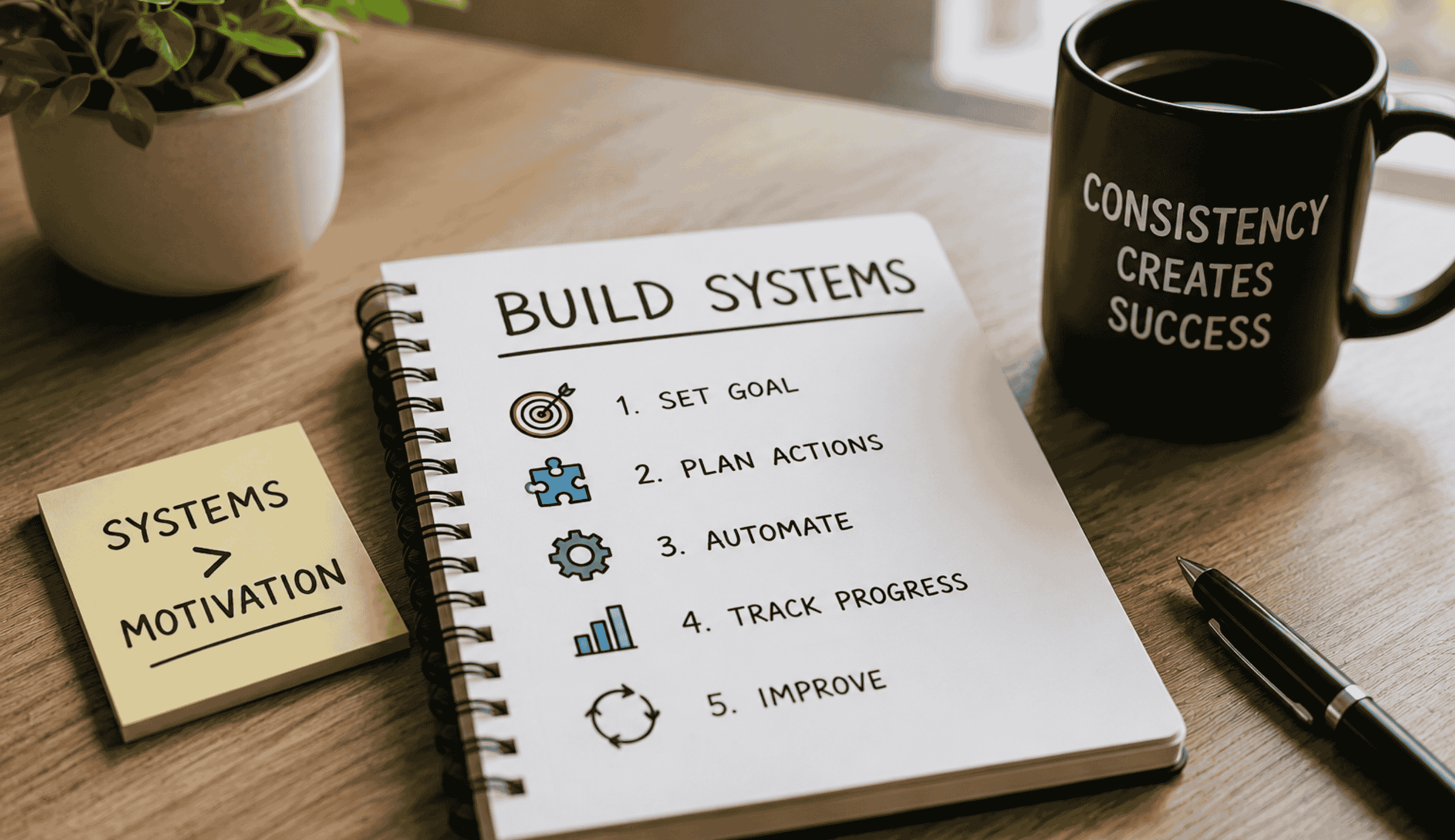
Build systems to achieve goals instead of depending on motivation. Most people believe motivation is the key to success. They wait for the right mood, the perfect time, or a sudden burst of inspiration before starting their work.
But the truth is simple: motivation does not last.
Some days you feel highly energetic and productive. Other days you feel tired, distracted, or completely unmotivated. When your progress depends only on motivation, consistency becomes very hard to maintain.
That is why successful people focus on systems rather than emotions.
A system keeps you moving forward even when motivation is missing. It removes decision fatigue, builds strong habits, and creates long term progress through consistency.
Successful people like Jeff Bezos and Sergey Brin did not rely on motivation alone. They built strong routines, structured processes, and repeatable systems that allowed them to perform consistently for years. This is what created their long term success.
Build systems to achieve goals effectively
Motivation can help you start, but it cannot guarantee long-term success.
For example, many students study hard only a few days before exams. They rely on pressure and temporary motivation. Some may get decent results once, but this approach usually creates stress and inconsistency.
Now compare that to a student who studies for one or two hours every day using a fixed schedule. That student may not always feel motivated, but the routine keeps them progressing steadily.
Over time, the second student usually performs better because consistency beats intensity.
This is the power of systems.
Why build systems to achieve goals instead of motivation
A system is a repeatable process that helps you achieve results consistently.
Instead of focusing only on the final goal, you focus on the daily actions that lead to the goal.
For example:
A goal is to lose 10 kilograms
A system is exercising daily, eating healthier meals, and sleeping properly
A goal is to learn Data Science
A system is studying Python every day, building projects weekly, and practicing consistently
Systems make progress automatic. They reduce the need to constantly depend on willpower.
When you build systems to achieve goals, you remove emotional decision-making and replace it with structure. This is what makes progress stable and predictable over time.
How to build systems to achieve goals step by step
Successful companies like Amazon were not built on motivation alone. They were built using systems, processes, and long-term thinking.
1. Define a Clear Goal
Be specific about what you want to achieve.
2. Break the Goal Into Daily Actions
Small repeated actions create massive long-term results.
3. Automate Your Habits
Make good actions easier to perform.
4. Track Your Progress
Tracking helps you understand what is working and what is not.
5. Improve the System Slowly
Start small and improve one habit at a time. Do not aim for perfection, aim for consistency.
Systems vs Motivation: Which One Wins?
Motivation is like a spark. It can help you begin, but it fades quickly.
A system is like an engine. It keeps running even when you feel tired or distracted.
The key difference is sustainability. Motivation is emotional, but systems are structural. That is why systems always win in the long run.
Final Thoughts
Many people spend years waiting to feel motivated before they take action.
But motivation is temporary.
Systems are reliable.
If you truly want to achieve your goals, stop depending only on inspiration and start building routines that help you progress every day.
Even small systems can completely change your future when followed consistently.
Over time, these small daily actions compound into massive results that motivation alone can never create.
If you want to learn more about systems thinking, you can read:
https://en.wikipedia.org/wiki/Systems_thinking
Your success will not come from motivation alone.
It will come from the systems you build and follow every single day.